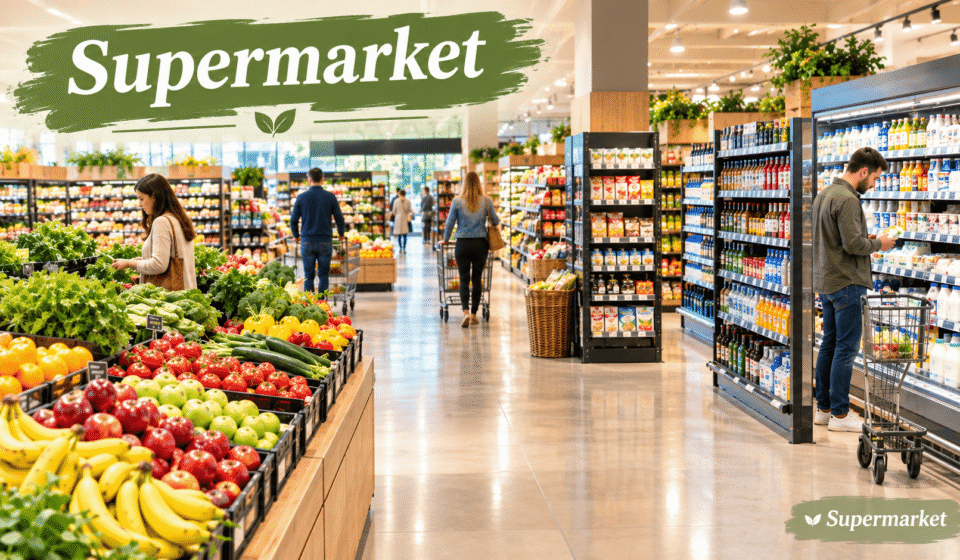

A supermarket is a self-service retail store that sells a wide range of food products and everyday consumer goods. It typically includes separate sections for fresh produce, dairy products, bakery items, packaged groceries, beverages, frozen foods, cleaning supplies, and personal care products.
Customers generally enter the store, select items from shelves or refrigerated displays, place their purchases in a basket or shopping cart, and pay at a checkout counter. Depending on the retailer, payment options may include cash, debit cards, credit cards, mobile payments, or self-checkout facilities.
The main purpose of a supermarket is to make routine shopping more convenient by bringing different product categories together. Its size and selection can vary considerably depending on its location, target customers, and business model.
Main Characteristics of a Supermarket
Several features distinguish a supermarket from smaller retail outlets.
- Multiple product categories: Customers can find food, beverages, and many household essentials in one place.
- Self-service shopping: Shoppers usually select products independently rather than requesting every item from a shopkeeper.
- Organized departments: Products are grouped by category to make navigation easier.
- Displayed prices: Shelf labels and product tags help customers understand prices before purchasing.
- Inventory systems: Staff monitor stock levels, expiry dates, product availability, and replenishment requirements.
- Checkout facilities: Purchases are recorded and totaled through manual or electronic billing systems.
These characteristics allow supermarkets to serve a large number of customers while maintaining an organized shopping environment.
History and Development of Supermarkets
Supermarkets developed from traditional grocery shops and other food retailers as self-service shopping became more common during the early twentieth century. Earlier grocery stores often relied on shopkeepers to retrieve products for customers. The self-service approach changed this arrangement by allowing shoppers to browse shelves and select items themselves.
Over time, retailers began combining more product categories under one roof. Larger stores offered expanded selections, standardized pricing, refrigerated food sections, and checkout counters designed to handle higher shopping volumes.
Developments in transportation, food packaging, refrigeration, and distribution networks also helped retailers manage larger inventories and supply more locations. As consumer demand increased, supermarkets expanded into residential neighborhoods, shopping centers, and suburban areas.
Technology introduced further changes. Barcode scanners, electronic payment systems, computerized inventory software, and digital sales records improved the speed and accuracy of everyday operations. More recently, online grocery platforms and mobile applications have allowed customers to order products without visiting a physical store.
Today, supermarkets range from compact neighborhood outlets to large stores with extensive food and household selections. Their operating methods continue to evolve as customer expectations, technology, and retail competition change.
Common Types of Supermarkets
Not every supermarket follows the same business model. Retailers adjust their store size, product selection, pricing, and services to meet the needs of different customers.
1. Traditional Supermarkets
Traditional supermarkets concentrate primarily on groceries and everyday household necessities. Their departments commonly include fruits, vegetables, dairy products, meat, bakery goods, canned foods, beverages, and cleaning supplies.
These stores are suitable for routine shopping because customers can purchase fresh ingredients and packaged products during one visit. Some also include prepared foods, pharmacies, or small specialty sections.
2. Discount Supermarkets
Discount supermarkets focus on providing competitive prices. They may reduce operating expenses through simpler store layouts, efficient staffing, limited product selections, or purchasing arrangements that help control costs.
Many carry private-label products alongside well-known brands. This gives shoppers alternatives at different price points. However, lower prices are not guaranteed for every product, so customers should compare individual items rather than assume that one store is always the cheapest.
3. Neighborhood Supermarkets
Neighborhood supermarkets serve residential communities and nearby customers. They are often smaller than large-format retailers and emphasize accessibility, routine purchases, and convenient shopping trips.
Their selection may include essential groceries, fresh food, beverages, and frequently purchased household items. Some offer extended opening hours or local delivery, depending on customer demand and business resources.
4. Specialty Supermarkets
Specialty supermarkets focus on particular products, dietary preferences, or customer groups. Examples include stores specializing in organic foods, imported groceries, regional ingredients, international cuisines, or premium food products.
These retailers may offer items that are difficult to find in general supermarkets. Their prices and product ranges depend on sourcing arrangements, local demand, and the availability of specialized suppliers.
5. Hypermarkets and Superstores
Hypermarkets and superstores are related large-format retail concepts, but they are not identical to conventional supermarkets. In addition to groceries, they may sell clothing, electronics, furniture, kitchen equipment, toys, and other general merchandise.
Their large floor areas allow them to offer extensive product selections. Customers may use them for both grocery shopping and purchases that would otherwise require visits to several different retailers.
Products and Departments Found in a Supermarket
A supermarket’s departments are designed to group related products together. Although the exact layout varies, most stores organize merchandise according to storage requirements, product type, and shopping behavior.
| Department | Common products |
| Fresh produce | Fruits, vegetables, herbs |
| Bakery | Bread, cakes, pastries, rolls |
| Dairy and chilled foods | Milk, cheese, yogurt, butter |
| Meat and seafood | Fresh or packaged meat and fish |
| Packaged groceries | Rice, flour, pasta, cereals, canned foods |
| Frozen foods | Frozen vegetables, meals, desserts |
| Beverages | Water, juice, tea, coffee, soft drinks |
| Personal care | Soap, shampoo, toothpaste, skincare products |
| Household essentials | Detergent, tissues, cleaning supplies |
| Baby and pet care | Diapers, baby food, pet food |
Fresh and Perishable Products
Fresh produce, dairy products, meat, seafood, and other chilled foods require careful handling. Supermarkets use appropriate storage conditions, refrigeration, temperature monitoring, and stock rotation to maintain product quality and reduce spoilage.
Employees may also inspect packaging, check dates, remove damaged items, and replenish displays. Proper food handling is essential because unsuitable storage can affect both quality and safety.
Packaged and Non-Food Products
Packaged groceries include products such as cooking oil, flour, spices, snacks, breakfast cereals, and canned food. These items often have longer storage lives than fresh products, although their storage conditions and expiry dates still matter.
Non-food departments provide products such as toiletries, laundry detergent, tissues, kitchen supplies, and selected personal care items. Their availability depends on the store’s size and target market.
Seasonal and Promotional Products
Supermarkets may create special displays for holidays, seasonal foods, school supplies, or other products associated with particular times of the year. These displays can help customers discover relevant items, while promotions may encourage additional purchases.
Shoppers should still compare prices, package sizes, and promotional conditions before deciding whether an offer represents good value.
How Does a Supermarket Work?
A supermarket depends on several connected processes that keep products available, maintain service quality, and support profitable operations.
Purchasing and Supplier Relationships
Supermarkets obtain merchandise from manufacturers, wholesalers, farmers, distributors, and other suppliers. Purchasing staff evaluate factors such as product quality, demand, delivery reliability, price, and contractual terms.
Reliable supplier relationships help stores maintain consistent stock levels. Fresh-food departments may require more frequent deliveries, while packaged products can often be ordered according to longer replenishment schedules.
Inventory and Stock Management
Inventory management involves tracking the products a store has available, identifying items that need replenishment, and monitoring products that sell slowly or approach their expiry dates.
Retailers may use inventory software and sales records to estimate future demand. Effective stock control helps reduce empty shelves, excess inventory, spoilage, and unnecessary storage costs.
For perishable goods, staff must also rotate stock appropriately and follow applicable food safety procedures.
Store Layout and Product Placement
The layout determines how customers move through the supermarket and find products. Aisles, department signs, shelf labels, and refrigerated displays help shoppers navigate the store.
Retailers may place frequently purchased items in convenient locations and use promotional displays to highlight selected products. These decisions influence visibility and shopping behavior, so customers benefit from following a list and comparing alternatives.
Checkout and Payment
At checkout, products are scanned or entered into a billing system, and the total amount is calculated. Customers then complete payment through the available methods.
Some supermarkets use self-checkout systems, which allow customers to scan and pay for their own purchases. Staff-assisted checkout remains common, particularly for large shopping trips or situations requiring additional help.
Pricing and Promotions
Supermarkets establish prices based on factors such as purchase costs, operating expenses, competition, demand, and pricing objectives. Promotions may include temporary discounts, loyalty rewards, multi-item offers, or retailer-branded products.
Successful pricing requires balancing customer value with the costs of running the business. A product’s displayed discount should always be evaluated against its actual price, quantity, and quality.
Benefits of Shopping at a Supermarket
Supermarkets offer several advantages, particularly for households that need to purchase different everyday products regularly.
Convenience and Product Variety
One of the main advantages is the ability to buy groceries and household necessities in a single location. Customers can plan meals, replenish kitchen supplies, purchase toiletries, and pick up cleaning products without visiting multiple stores.
The wide product selection also gives shoppers opportunities to compare brands, package sizes, ingredients, and prices.
Price Comparison and Promotions
Clearly displayed prices make it easier to compare products. When unit pricing is available, customers can compare the cost per kilogram, liter, or individual unit instead of relying only on the package price.
Discounts and loyalty programs may provide additional savings. However, customers should consider whether they genuinely need a product before purchasing it solely because it is on promotion.
Organized Shopping Experience
Clearly marked aisles, product categories, shopping carts, baskets, and checkout systems make shopping more structured. Many stores also provide customer service desks and staff assistance for locating products or resolving billing issues.
Access to Everyday Essentials
Supermarkets provide a convenient source of frequently used items, including cooking ingredients, beverages, hygiene products, and household supplies. This is particularly useful for families and people who prefer to complete their regular shopping in fewer trips.
Multiple Shopping and Payment Options
Depending on the retailer, customers may be able to pay with cash, bank cards, or digital payment services. Some supermarkets also provide online shopping, pickup services, and home delivery.
These options can improve accessibility for customers with busy schedules or limited ability to visit a physical store.
Disadvantages and Challenges of Supermarkets
Despite their advantages, supermarkets also present certain limitations for customers and retailers.
Crowds and Waiting Times
Popular supermarkets can become crowded during weekends, holidays, and peak shopping hours. Long checkout queues and busy aisles may make the shopping experience less convenient.
Visiting during quieter periods, where possible, can help customers complete their purchases more efficiently.
Impulse Buying
Promotional displays, attractive packaging, and strategically positioned products can encourage unplanned spending. Customers may leave with items they did not intend to purchase, increasing their total bill.
A shopping list and a fixed budget can help reduce unnecessary purchases.
Food Waste and Packaging
Supermarkets must manage products that spoil, become damaged, or remain unsold. Fresh foods can be particularly challenging because demand and shelf life vary.
Packaging waste is another concern, especially when products use excessive plastic or disposable materials. Inventory planning, food donation arrangements, recycling, and more efficient packaging can help address these issues when properly implemented.
Limited Specialized or Local Products
A general supermarket may not stock every regional ingredient, specialist food, or locally produced item. Smaller independent shops and specialty retailers sometimes provide a more focused selection.
Competition for Small Businesses
Large retailers can create pricing pressure for independent grocery stores. Smaller businesses may find it difficult to match their purchasing power, marketing budgets, or product range. At the same time, local shops can compete through personalized service, specialized products, convenience, and relationships with nearby customers.
Supermarket vs. Grocery Store vs. Convenience Store
These retail formats overlap, but they generally serve somewhat different shopping needs.
| Feature | Supermarket | Grocery store | Convenience store |
| Typical size | Medium to large | Varies | Usually small |
| Product selection | Broad grocery and household range | Mainly groceries | Selected everyday essentials |
| Main purpose | Routine and larger shopping trips | Grocery purchases | Quick, immediate purchases |
| Layout | Multiple aisles and departments | Depends on the store | Compact and easy to navigate |
| Shopping duration | Often longer | Varies | Usually shorter |
| Pricing | Varies by retailer | Varies by retailer | Some products may cost more |
A supermarket typically offers a wider assortment of products and more clearly divided departments than a small grocery shop. A convenience store generally prioritizes quick access to selected essentials rather than a complete weekly shopping selection.
However, the term “grocery store” is used differently across countries and communities. In some places, it describes supermarkets as well as smaller shops. The distinction therefore depends on local retail terminology, store size, and product range.
Supermarket Technology and Modern Shopping Trends
Technology is changing how supermarkets manage products and serve customers. Many retailers use digital systems to coordinate sales, purchasing, inventory, and customer transactions.
Digital Inventory Systems
Inventory software can help employees identify low-stock items, monitor sales patterns, and estimate future demand. More accurate stock information can improve product availability and help stores avoid unnecessary orders.
Self-Checkout and Contactless Payments
Self-checkout terminals and contactless payment systems can simplify transactions. Their effectiveness depends on store layout, customer familiarity, equipment reliability, and the availability of staff to assist when problems occur.
Online Supermarket Shopping
Online grocery services allow customers to browse digital catalogs, compare products, place orders, and arrange delivery or collection where available. This can save travel time, although delivery fees, product substitutions, and limited delivery slots may affect the experience.
Customer Data and Personalized Offers
Loyalty programs and sales records can help retailers understand shopping patterns and develop relevant promotions. However, collecting and using customer information also requires appropriate privacy protections and compliance with applicable data laws.
Sustainability Initiatives
Some supermarkets introduce food donation programs, recycling facilities, energy-efficient refrigeration, reusable-bag policies, and improved inventory planning. These measures can help reduce waste and resource consumption, although their results depend on how consistently they are implemented.
Tips for Shopping Smartly at a Supermarket
Good shopping habits can help customers control spending, choose suitable products, and reduce waste.
- Prepare a shopping list: Write down the products you need before leaving home to avoid unnecessary purchases.
- Set a budget: Decide how much you can spend and prioritize essential items.
- Compare unit prices: Check the price per kilogram, liter, or unit when this information is available.
- Check product dates: Review expiry or use-by dates, particularly for refrigerated and other perishable goods.
- Read product labels: Compare ingredients, nutritional information, storage instructions, and package details when relevant.
- Evaluate promotions carefully: Check the final price, quantity, and terms instead of assuming every discount offers the best value.
- Avoid excessive bulk buying: Purchase large quantities only when the items can be stored properly and used before they deteriorate.
- Plan food storage: Consider refrigerator space, pantry capacity, and meal plans before buying fresh or frozen products.
- Compare brands: Store-brand products may provide good value, but quality, ingredients, and suitability should guide the decision.
- Reduce food waste: Use older suitable products first and plan meals around ingredients already available at home.
These simple practices make supermarket shopping more organized and can help households manage their grocery expenses.
What to Consider When Opening a Supermarket
Opening a supermarket requires careful planning because the business must manage product availability, food safety, customer service, and operating costs simultaneously.
Location and Customer Demand
Business owners should study the local population, nearby housing, transport access, parking availability, competing stores, and common shopping habits. A location with suitable customer demand is important, but rent and other property expenses must also fit the business budget.
Startup Costs and Financial Planning
Initial expenses may include rent or property costs, shelving, refrigeration equipment, checkout systems, inventory, employee wages, utilities, insurance, and working capital. Costs vary according to store size, location, equipment requirements, and product selection.
A financial plan should account for ongoing expenses as well as the money needed to open the store.
Supplier Selection and Inventory
Reliable suppliers help maintain product quality and reduce disruptions. Business owners should compare pricing, delivery schedules, minimum order quantities, payment terms, and return policies.
Stock should be selected according to local demand rather than simply filling shelves with a large number of products.
Licensing and Food Safety
Supermarket operators must identify the business registration, food safety, tax, employment, and other legal requirements applicable to their location. Requirements vary by jurisdiction and may differ for businesses that sell fresh meat, prepare food, or offer specialized services.
Customer Service and Store Management
Clean facilities, accurate pricing, helpful employees, organized shelves, and reliable billing contribute to customer confidence. Effective management also requires monitoring sales, controlling losses, reviewing inventory, and responding to complaints.
The Role of Supermarkets in Local Communities
Supermarkets support everyday life by making food and household necessities available in convenient locations. They also create employment in areas such as sales, store management, warehousing, transportation, purchasing, and distribution.
Their supplier networks may provide opportunities for farmers, manufacturers, and local producers to reach more customers. Some retailers also support communities through food donations, local sourcing, or charitable initiatives.
The wider impact depends on individual business practices and local conditions. Supermarkets can improve access to products and create jobs, while competition from large retailers may place pressure on smaller independent businesses. A healthy local retail environment benefits from reliable food access, responsible business practices, and a range of shopping options that meet different community needs.
Conclusion:
A supermarket is more than a place to purchase groceries. It is a retail operation that connects suppliers, products, inventory systems, employees, and customers through an organized shopping experience. Its departments make everyday items easier to find, while purchasing and stock management processes help maintain product availability.
Different supermarket formats serve different needs, from affordable grocery shopping to specialized food selection and large-format retail. Although supermarkets provide convenience, variety, and opportunities for price comparison, customers should remain aware of impulse buying, product quality, and unnecessary spending.
Understanding how supermarkets operate can help shoppers make informed choices and give aspiring retailers a clearer picture of the industry’s requirements. By balancing convenience, product quality, affordability, and responsible management, supermarkets can continue serving an important role in everyday commerce.
Wollmatten: Types, Benefits, and How to Choose the Right One