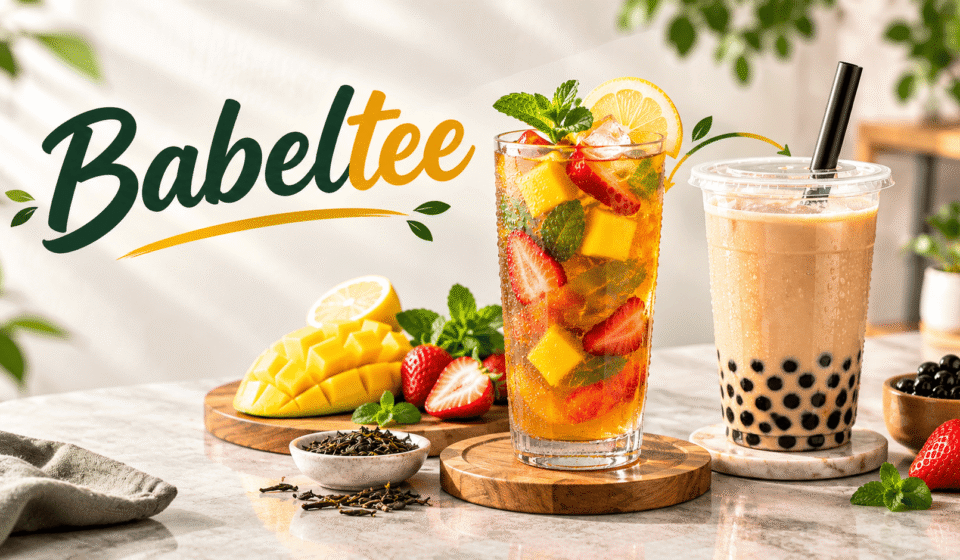

Babeltee is best described as an emerging and informal tea-related term rather than a traditional tea variety with a fixed preparation method. When used to describe a beverage, the term generally refers to creating a tea drink according to personal taste. A person might start with black tea, green tea, oolong, matcha, or another base and then add ingredients such as fruit, herbs, milk, sweeteners, or toppings. For example, a drink described as it could combine green tea with mango and mint. Another version might use black tea, milk, and honey. Someone else could prefer matcha with oat milk and vanilla.
There is no confirmed formula that every drink must follow. This flexibility is one of the reasons the term can be interpreted differently from one source to another.
It is therefore more useful to think of it as a flexible concept or informal label rather than a standardized beverage.
Babeltee Meaning Explained
The meaning of it is not as straightforward as the meaning of established beverage terms. It has appeared in different online contexts, which makes a single definition difficult to establish.
Is Babeltee a Real Word?
It is a term that is used online, but online usage does not necessarily mean that it represents an officially recognized beverage category.
Established drinks generally have recognizable characteristics. They may have a documented history, commonly accepted ingredients, traditional preparation methods, or a widely understood definition.
Babeltee currently does not have that same level of consistency.
Some people use it when discussing customizable tea drinks, while others associate it with bubble tea. Because of this, its meaning is largely dependent on context.
A practical definition would be:
It is an emerging online term that can refer to customizable tea-based drinks or a variation associated with the idea of bubble tea.
Why Is It Called Babeltee?
The exact reason behind the name is unclear.
One obvious reason for the confusion is its similarity to “bubble tea.” The spelling may have developed as a creative variation, phonetic interpretation, typing error, or search variation. It is also possible that different people have adopted the term independently.
However, there is not enough reliable evidence to identify one explanation as the definite origin of the word.
This is why claims about the name should be treated carefully rather than presented as established history.
Is Babeltee the Same as Bubble Tea?
It and bubble tea are closely related in some online discussions, but they should not automatically be considered identical.
Bubble tea is an established beverage with a recognizable history and a broad range of recipes. It originated in Taiwan during the 1980s and became known internationally for combinations of tea, milk or fruit flavors, sweeteners, and various toppings.
It is different because its meaning is still flexible.
| Feature | Babeltee | Bubble Tea |
| Definition | Informal and emerging | Established beverage |
| Standard recipe | No fixed formula | Recognizable preparation styles |
| Origin | Unclear | Taiwan |
| Tea base | Flexible | Often black, green, oolong, or similar teas |
| Fruit and milk | Optional | Frequently used |
| Tapioca pearls | Optional | Commonly associated |
| Historical background | Not clearly documented | Well established |
| Meaning | Depends on context | Widely understood |
The similarity between the names explains why people often connect them, but that does not mean Babeltee is officially another name for bubble tea.
The Origins of Babeltee
One of the most difficult questions about it is where the term originated.
There is currently no widely accepted historical record identifying a particular person, café, company, country, or event as the creator of it as a beverage.
This lack of evidence makes it difficult to provide a definite origin story.
The term may have developed through online beverage discussions, changing search behavior, creative naming, or its similarity to the phrase “bubble tea.” It may also have been used independently by different websites or communities.
Another important issue is repeated online reporting. When several websites make the same claim, that does not necessarily mean the claim has been independently verified. Sometimes websites repeat information from one another without providing evidence for the original statement.
For that reason, it is better to describe the origin of Babeltee as unclear rather than attach a specific historical story to it.
The Established Origins of Bubble Tea
Bubble tea provides useful background because it is the beverage most commonly associated with it.
Modern bubble tea emerged in Taiwan during the 1980s. Its early development is connected with Taiwanese tea shops, although different businesses have competing stories about exactly who invented the drink.
The beverage eventually became popular far beyond Taiwan. As it spread internationally, its recipes expanded considerably.
Today, bubble tea can be prepared using different tea bases and flavor combinations. Milk, fruit, syrups, and toppings are commonly used, while tapioca pearls remain one of its most recognizable features.
This established history makes bubble tea very different from Babeltee, whose specific history remains uncertain.
How Babeltee Became Associated With Customizable Tea Drinks
Modern beverage culture places a strong emphasis on customization.
Customers can often choose the tea base, sweetness, amount of ice, milk, fruit flavor, and toppings. This makes it possible for two drinks made from the same basic tea to taste completely different.
The idea of customization is also useful for understanding how some online descriptions use Babeltee.
A simple tea can become a fruit-based drink with mango or strawberry. It can become creamy by adding dairy or plant-based milk. Herbs such as mint or basil can create a fresher flavor, while honey or another sweetener can adjust the taste.
This does not establish an official it recipe. Instead, it shows why the term is sometimes connected with flexible tea combinations.
Common Ingredients Associated With Babeltee
Because there is no standard formula, the ingredients can vary significantly.
Tea Bases
Potential tea bases include:
- Black tea
- Green tea
- White tea
- Oolong tea
- Matcha
- Jasmine tea
- Herbal infusions
Black tea works well when a stronger flavor is desired. Green tea tends to offer a lighter and fresher profile, while oolong can provide a balanced flavor between lighter and darker teas.
Matcha is particularly suitable for creamy drinks, while herbal infusions can provide an option without traditional tea caffeine.
Fruits
Fruit can add natural sweetness, acidity, and aroma.
Common possibilities include:
- Mango
- Strawberry
- Peach
- Lemon
- Lime
- Orange
- Pineapple
- Kiwi
- Blueberries and other berries
Herbs and Flavor Additions
Mint, basil, ginger, vanilla, and selected spices can be used to create more distinctive combinations.
The important point is that these ingredients are possibilities rather than requirements.
Milk and Plant-Based Alternatives
A creamy version may contain dairy milk or a plant-based alternative such as:
- Oat milk
- Soy milk
- Almond milk
- Coconut milk
A fruit-based version can also be prepared without milk.
Sweeteners
Honey, sugar, maple syrup, and flavored syrups can be used depending on the desired level of sweetness.
Optional Toppings
Some versions may include toppings associated with modern tea drinks, including tapioca pearls, fruit jelly, popping pearls, or other chewy additions.
Again, no single topping is required to make a drink “Babeltee.”
Popular Flavor Combinations
The flexible nature of the term makes experimentation possible.
Mango Green Tea With Lime
Mango adds a sweet tropical character, while lime provides acidity and helps balance the flavor of green tea.
Strawberry Green Tea With Mint
Strawberry creates a fruity profile, while mint adds a refreshing finish.
Peach Oolong
Peach can complement the smooth and slightly roasted character of oolong tea without overwhelming it.
Matcha With Oat Milk and Vanilla
Matcha provides an earthy flavor, while oat milk adds creaminess and vanilla gives the drink a softer, sweeter character.
Black Tea With Milk and Honey
A strong black tea can be combined with milk and a moderate amount of honey for a simple, rich beverage.
These combinations should be viewed as examples of customization rather than official recipes.
Can You Make Babeltee at Home?
Yes. If it is being used to describe a customizable tea drink, preparing one at home can be straightforward.
Start by selecting a tea base and brewing it properly. Once the tea is ready, remove the leaves or tea bag. If you are preparing an iced drink, allow the tea to cool before adding ice.
Next, choose one or two complementary flavors. Fruit, herbs, milk, or a small amount of sweetener can be added according to taste.
A simple process looks like this:
- Choose your preferred tea.
- Brew it according to the type of tea.
- Remove the leaves or tea bag.
- Add fruit, herbs, or another flavor.
- Add milk if desired.
- Adjust sweetness.
- Cool the drink if serving it over ice.
- Add optional toppings.
- Serve and adjust the flavor if necessary.
Keeping the combination simple is often better than mixing too many strong ingredients.
Does it Require Boba?
No.
Boba, usually referring to chewy tapioca pearls, is strongly associated with bubble tea. These pearls are traditionally made using tapioca starch derived from cassava.
Because Babeltee is sometimes associated with bubble tea, people may expect it to contain boba. However, there is no established definition requiring tapioca pearls.
A drink described as it could contain fruit, herbs, milk, or other ingredients without including boba at all.
If a particular café or website uses the name it for a specific product, its own ingredient list would determine what that version contains.
Is Babeltee Healthy?
Calling it healthy without knowing the recipe would be misleading.
The nutritional characteristics of a tea drink depend on what is added to it.
Unsweetened tea with fresh fruit and herbs can be quite different from a drink containing large quantities of sugar, flavored syrup, sweetened milk, and toppings.
Tea naturally contains various plant compounds, while fruits can contribute nutrients and flavor. However, additional sugar and calorie-dense ingredients can significantly change the overall nutritional profile.
Therefore, the name Babeltee does not tell you whether a drink is healthy.
The better approach is to consider the actual ingredients, serving size, and amount of added sugar.
Does it Contain Caffeine?
That depends on the tea used to prepare it.
Black tea, green tea, white tea, oolong, and matcha naturally contain caffeine. Herbal infusions are often caffeine-free, depending on their ingredients.
This means two drinks described as Babeltee could have completely different caffeine levels.
Anyone trying to limit caffeine should check the tea base instead of assuming that the name of the drink indicates its caffeine content.
Babeltee vs. Bubble Tea: Key Differences
The main difference is the level of definition behind each term.
Bubble tea is a recognized beverage with a documented history, established cultural identity, and many familiar preparation styles.
It is much less clearly defined. It can appear as a term for customizable tea drinks or as a variation connected to bubble tea.
This distinction also explains why search results for Babeltee can sometimes be confusing. Someone searching for the term may actually be looking for bubble tea, while another person may have encountered it as the name of a customized tea concept.
The two terms overlap in some contexts, but they should not automatically be treated as exact synonyms.
Why Do People Search for Babeltee?
The unusual spelling is likely one of the main reasons the term attracts attention.
People who see an unfamiliar word that resembles “bubble tea” may naturally search for an explanation. Others may encounter the term in social media posts, articles, websites, or beverage discussions and want to know whether it represents a new drink.
Several factors can contribute to this interest:
- Its similarity to the familiar term bubble tea
- Curiosity about unusual beverage names
- Interest in customizable drinks
- The growth of tea-based beverage trends
- Social media discussions
- Search variations and spelling differences
The result is a term that can generate considerable curiosity even though its exact meaning remains unsettled.
How Should You Interpret the Term Babeltee Today?
The context surrounding the word is important.
If it appears in a discussion about fruit-infused or customizable tea, it may be referring to a flexible tea-based drink.
If it appears alongside terms such as boba, tapioca pearls, milk tea, or Taiwanese drinks, it may be functioning as a variation or search-related term connected to bubble tea.
This approach avoids assigning the term a definition that may not apply in every situation.
Final Verdict:
It is best understood as an emerging and context-dependent online term rather than a formally established tea category.
Its connection with bubble tea is understandable because the names are similar. Some online usage treats Babeltee as a variation or search-related form of bubble tea, while other descriptions use it for customizable tea drinks containing ingredients such as fruit, herbs, milk, sweeteners, and optional toppings.
The biggest difference is the level of certainty surrounding each term. Bubble tea has a recognizable identity and a documented history connected with Taiwan during the 1980s. it, in contrast, does not currently have a universally accepted recipe, inventor, or origin story.
Therefore, when you encounter the word, the surrounding context matters. It may describe a customizable tea drink, a creative term related to bubble tea, or simply a variation that developed through online usage.
Rather than assuming that it is an ancient tea, an official bubble tea synonym, or a standardized beverage, it is more accurate to view it as a developing term whose meaning can change depending on how and where it is used.